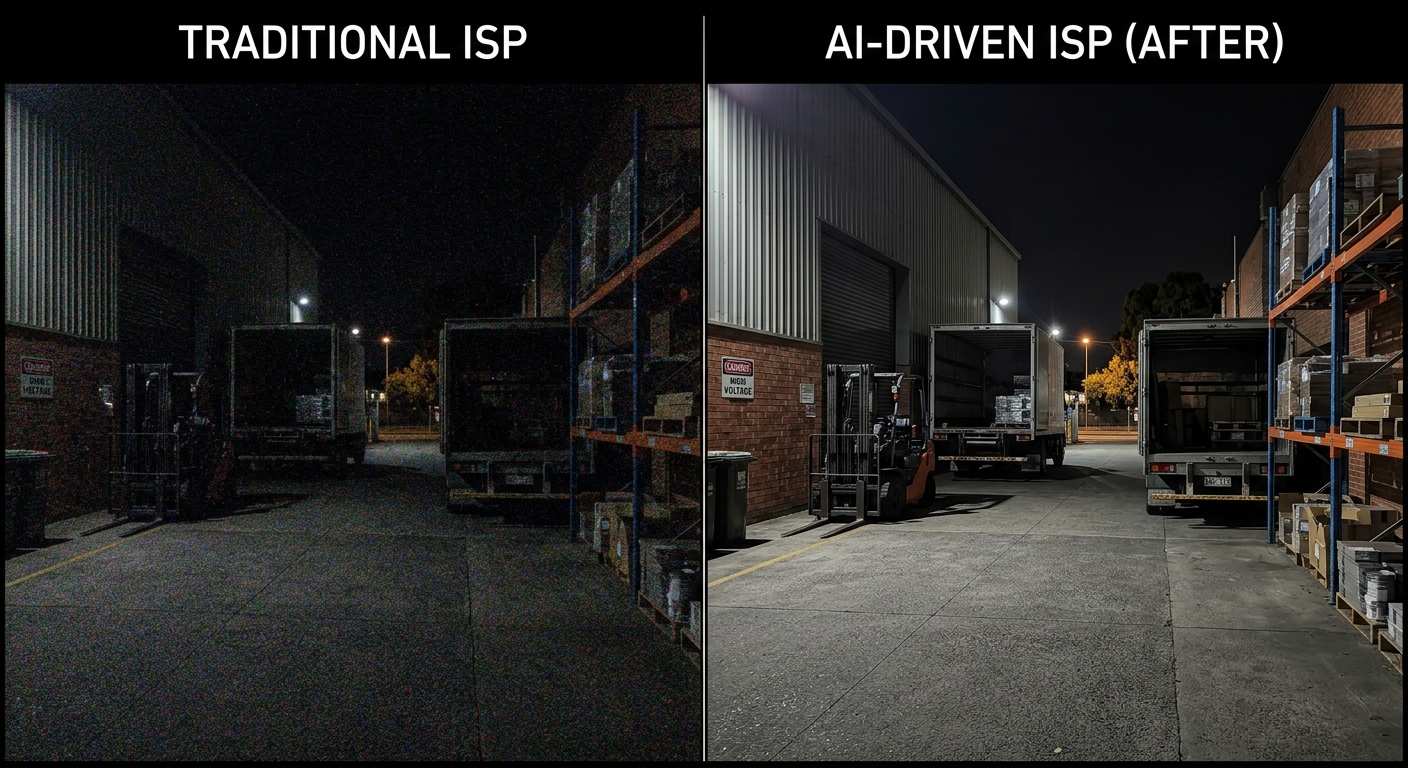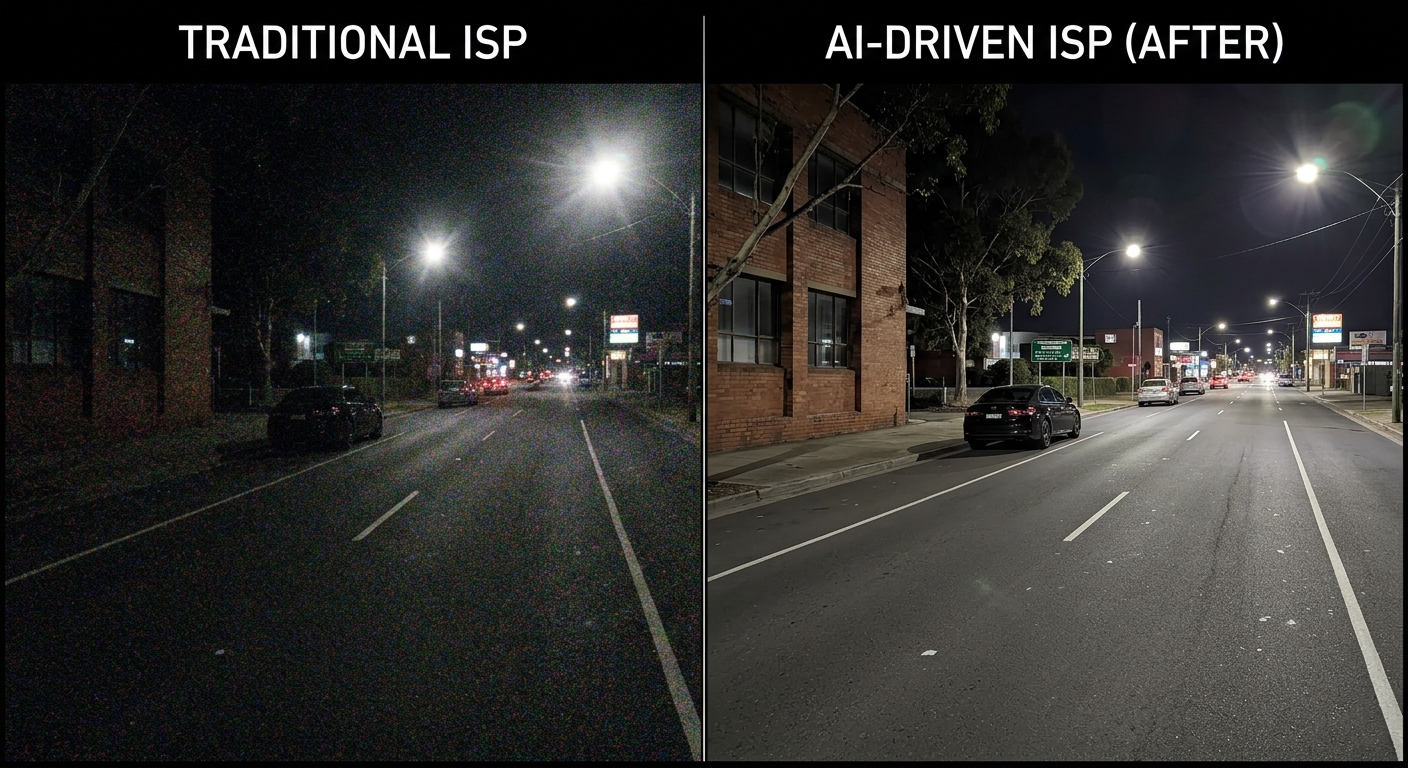
Optimizing Low-Light Vision: How AI ISP Enhances Edge Sensing Accuracy
As intelligent edge devices deploy into increasingly complex environments, raw sensing data quality directly dictates downstream AI accuracy. From autonomous navigation and robotics to smart surveillance and industrial inspection, optical challenges — such as extreme low-light, harsh dynamic range, and motion blur — have long undermined critical decision-making.
Traditional rule-based ISPs often force a trade-off between aggressive noise reduction and edge detail preservation. AI-driven Image Signal Processors (AI ISPs) redefine this paradigm by integrating deep learning directly into the hardware imaging pipeline:
Sub-Lux Extreme Denoising: Operating directly within the RAW domain, AI ISP algorithms restore clear structural details and faithful colors where traditional sensors see only noise, drastically cutting false-positive detection rates.
Task-Driven Semantic Tuning : Instead of optimizing purely for human aesthetics, AI ISPs prioritize machine-readable feature extraction—enhancing object boundaries , text , and critical cues required by edge vision models.
Instantaneous HDR Fusion : Real-time adaptation prevents highlight clipping and shadow detail loss under extreme contrast , ensuring 24/7 mission-critical operational stability.
Ultra-Low Latency & High Power Efficiency : Tailored for edge-native deployment, dedicated acceleration delivers high-frame-rate processing within tight thermal and energy budgets.
From "Seeing" to "Understanding"
AI ISP is not just an image enhancement tool ; it is a fundamental upgrade to machine perception at the edge. By transforming compromised optical input into rich, structured visual data, we empower edge systems to achieve unprecedented accuracy and reliability.
Explore our edge imaging solutions or speak with our engineers [ Contact Us ].